
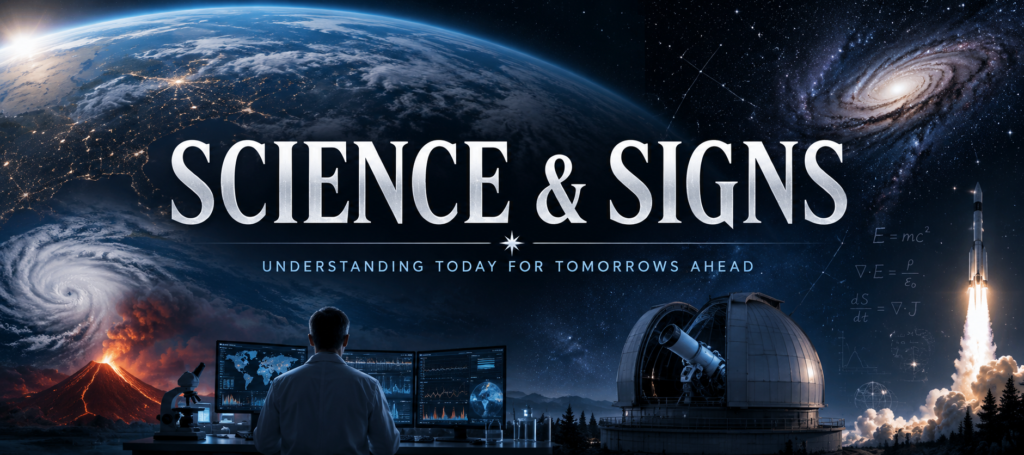
Understanding a Changing World
Science has transformed our understanding of the planet, the universe and humanity’s place within it. From climate and natural disasters to artificial intelligence, space exploration and emerging technologies, we examine the discoveries and developments that could shape our future—and the signs of a world undergoing extraordinary change.
Earth in Transition
Our planet is constantly changing. Earthquakes, volcanic eruptions, extreme weather, shifting climates and changes within the oceans and atmosphere reveal the immense forces shaping the world around us. Scientific observation allows us to understand these processes more clearly, while also helping us assess the risks they may present to societies around the globe.
Technology and the Future
Artificial intelligence, biotechnology, robotics and increasingly powerful computer systems are changing society at remarkable speed. These technologies offer enormous possibilities, but they also raise profound questions about security, employment, human identity and the degree of control we may eventually hand to machines.
Astronomy & Space
Humanity is looking farther into space than ever before. Powerful telescopes are revealing distant worlds, missions are returning to the Moon and preparations for future journeys to Mars continue. At the same time, scientists monitor asteroids, solar activity and other cosmic phenomena that remind us that events far beyond Earth can influence the future of our planet.
Science & Signs Articles
Explore Astronomy & Space for our growing collection on comets, gravity, solar activity and life beyond Earth.
Latest Articles
-

The AI Threat Begins with Human Decisions
AI does not need to become all-powerful to cause harm. The evidence shows why autonomy, staffing, supervision and accountability must be treated as human responsibilities.
-

AI Should Support People, Not Replace Accountability: What Anthropic’s Warning Tells Us
Anthropic’s AI risk warning raises urgent questions about human oversight, workplace expertise and the difference between present harms and speculative existential scenarios.
-

Jiaxuan Zhang: Asking Where Quantum Probability Comes From
A profile of Oxford researcher Jiaxuan Zhang, her work on the Born rule and Sleeping Beauty, and the wider debate over where quantum probability comes…
-

Climate Overshoot: What Returning to 1.5°C Would—and Wouldn’t—Repair
What UNEP’s return pathway really requires, why cooling would not reverse every loss, and how to check climate headlines against the scientific evidence.
-
The Atlantic’s Great Conveyor: Could a Warming Planet Leave Britain Colder?
Could a warming planet leave Britain colder? Explore AMOC weakening, collapse risks and what the latest research means for the UK.
-

The Next Mass Extinction: What Are We Actually Losing?
Population decline, threatened species and extinction are different measures. What does the evidence reveal about a sixth mass extinction—and what can still be saved?
-
Thwaites Glacier: The Slow Disaster Behind the ‘Doomsday’ Name
Thwaites is not a countdown to an overnight apocalypse. The latest research reveals something more unsettling: ice loss that can outlast the changes that triggered…
-

Are We Mostly Water—or Mostly Empty Space?
Water by mass, tiny atomic nuclei and the sensation of solidity: how biological and quantum descriptions of the body can fit together, and where ‘made…
-
Quantum Entanglement: Does Anything Travel Faster Than Light?
Entanglement challenges our picture of separated objects. What do Bell tests establish, why can’t it send faster-than-light messages, and what remains a question of interpretation?
-
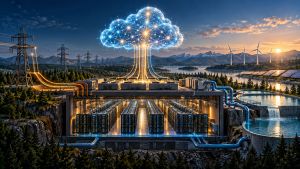
The Hidden Energy Cost of Artificial Intelligence
AI feels weightless on screen, but its electricity, water and infrastructure demands are real. What do the latest figures tell us—and who should bear the…